


Page 5 - reflections_dyslipidaemia_newsletter5_2023
P. 5
REFLECTIONS
                                                                                                                   Dyslipidaemia
     Dyslipidaemia Global Newsletter #5 2023


                                                                                                                   Dyslipidaemia


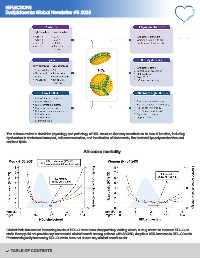
     The authors review in detail the physiology and pathology of HDL structure that may contribute to its loss of function, including
     dysfunction in cholesterol transport, cell communication, and inactivation of biohazards, like bacterial lipopolysaccharides and
     oxidized lipids.

                                                    All-cause mortality


     Clinical trials focused on increasing levels of HDL-C have been disappointing. Adding niacin, a drug shown to increase HDL-C, to
     statin therapy did not provide any incremental clinical benefit among patients with ASCVD, despite a 25% increase in HDL-C levels.
     Pharmacologically increasing HDL-C levels have not shown any clinical benefit so far.


          TABLE OF CONTENTS

